
WEOM HD CMOS LWIR Uncooled Module
The Workswell WEOM® HD CMOS is an ITAR-free, uncooled LWIR thermal camera core with a 1280 × 1024 px, 12 µm microbolometer, <30 mK NETD,...
WEOM HD CMOS LWIR Uncooled Module

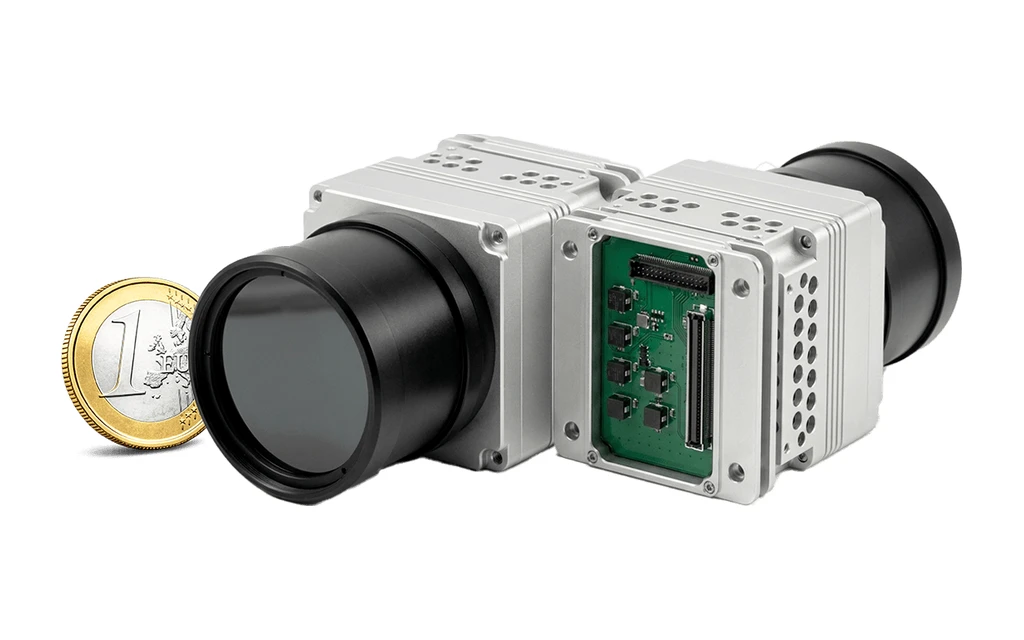
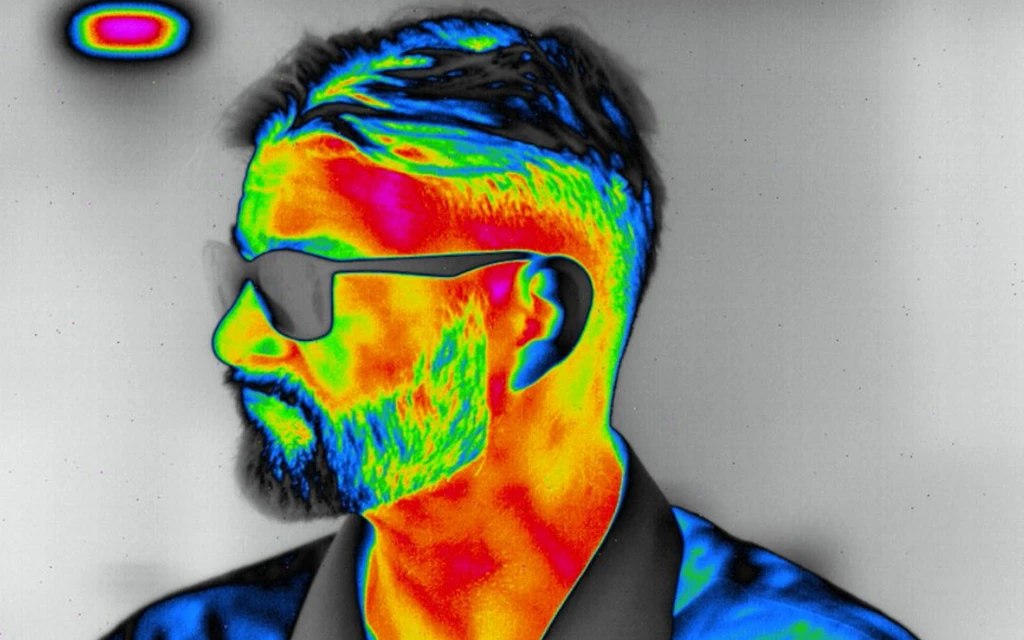
WEOM HD CMOS Thermal Core - compact OEM design for high-detail thermal imaging in UAV, defence and security systems.
The Workswell WEOM® HD CMOS is an ITAR-free, uncooled LWIR thermal camera core with a 1280 × 1024 px, 12 µm microbolometer, <30 mK NETD, 8–14 µm spectral band and 9 Hz or 30 Hz frame rate. Weighing under 85 g and drawing about 2.9 W, it is built for direct OEM integration into UAV, UGV, maritime, defence and security imaging systems. United Spectrum Instruments is the authorised Workswell distributor in India.
In UAV payloads, handheld observation devices, maritime cameras and perimeter security systems, engineers need a thermal engine that delivers fine image detail without adding size, weight or power. The Workswell WEOM® HD CMOS Thermal Core is an uncooled LWIR microbolometer camera module with a 1280 × 1024 px, 12 µm detector, designed for integrators who want to embed high-definition thermal imaging directly into their own electronics and system architecture.
Engineered for integration, the CMOS configuration pairs advanced FPGA image processing with thermal sensitivity below 30 mK, a 9 Hz or 30 Hz full frame rate, and a choice of four fixed-focus lenses or lensless delivery with an M34 thread. Weighing under 85 g without the lens and drawing typically 2.9 W from a 5 VDC supply, it gives both mobile and stationary platforms a high-resolution thermal foundation that standard VGA cores cannot match.
United Spectrum Instruments is the authorised distributor of Workswell products in India, providing sales, technical support, and integration expertise for embedding the WEOM HD CMOS core into your UAV, defence, security or industrial imaging platforms.
Understanding WEOM HD CMOS LWIR Uncooled Module
HD 1280 × 1024 Resolution — Four Times the Detail of VGA Thermal Cores
The WEOM HD is built around an uncooled LWIR microbolometer with 1280 × 1024 pixels on a 12 µm pitch — 1,310,720 independent thermal measurement points, four times the 327,680 pixels of a conventional 640 × 512 VGA thermal core. In practice, higher pixel count delivers two advantages that matter to integrators. First, at the same field of view each pixel covers a smaller area of the scene, so fine details — a person’s posture, a vehicle’s outline, a small drone against the sky, or a hot component on a distant structure — are rendered sharply instead of blurring into a few pixels. Second, at the same angular resolution, an HD core covers a wider field of view, letting a single camera watch more of the scene without sacrificing detail. This translates directly into detection, recognition and identification (DRI) range. According to Workswell’s Johnson-criteria calculations, the WEOM HD with the 83 mm lens can detect a standing human at about 4,380 m and a vehicle at about 10,610 m, while the 25 mm lens offers a 34° × 27° wide view for situational awareness. For UAV, border surveillance and maritime systems, this HD detail is what turns a thermal blob into an actionable target.
CMOS Digital Interface on an LWIR 8–14 µm Platform — Built for Direct Hardware Integration
The CMOS configuration of the WEOM HD is aimed at integrators who design their own electronics. Rather than delivering video through a finished connector such as HDMI or USB, the core’s digital video is intended for board-level connection to the integrator’s own processor, FPGA or embedded computer — including platforms such as NVIDIA Jetson, Raspberry Pi and NXP processors, which Workswell lists as compatible. This removes intermediate conversion stages, saving space, weight and power in tightly packaged gimbals, sights and camera heads. All advanced functions are controlled through Workswell’s unified TCSI serial interface, independent of the video path. The 8–14 µm LWIR band is the natural choice for passive day/night imaging: objects near ambient temperature emit most strongly here, and LWIR penetrates smoke and light haze better than visible cameras, delivering clear imagery in total darkness, at dusk and in poor weather.
Technical Specifications
- Detector: Uncooled LWIR microbolometer, 1280 × 1024 px, 12 µm pixel pitch
- Thermal Sensitivity (NETD): <30 mK
- Spectral Range: 8–14 µm
- Frame Rate: 9 Hz or 30 Hz full frame rate
- Lens Options: 25, 35, 50 or 83 mm fixed focus (34° to 10° HFOV) or lensless (M34 thread)
- Scene Temperature Range: −50 °C to +160 °C (High Gain), −50 °C to +600 °C (Low Gain)
- Size, Weight & Power: 43 × 42 × 51 mm, <85 g without lens, 5 VDC, typically 2.9 W
- Operating Temperature: −32 °C to +70 °C (MIL); start-up time <5 s
Key Features and Advantages
HD 1280 × 1024 Resolution — 1.3 Megapixel Thermal Detail
Over 1.3 million thermal pixels on a 12 µm pitch deliver four times the detail of VGA cores. Integrators gain longer DRI range with the same lens, or a wider field of view with the same detail — a decisive advantage for surveillance, long-range observation and high-altitude UAV imaging.
High Thermal Sensitivity — <30 mK NETD
Resolves temperature differences below 0.03 °C, producing crisp, low-noise images of low-contrast scenes. High sensitivity keeps detail visible in fog, rain, humid coastal air and thermally uniform night-time backgrounds where lower-sensitivity cores produce flat, washed-out images.
CMOS Digital Interface for Direct Hardware Integration
The CMOS configuration connects the core’s digital video directly to the integrator’s own electronics, eliminating intermediate conversion boards. This saves weight, volume and power in compact gimbals, handheld devices and embedded AI camera heads, while keeping full control over system architecture.
Advanced FPGA Image Processing
On-board FPGA processing provides automatic gain control with plateau histogram equalisation, manual brightness/contrast, median spatial filtering, 2× and 4× temporal filtering, 14 colour palettes (two user-definable), image flip/mirror and a user dead-pixel correction wizard — delivering display-ready images without host-side processing.
Flexible Optics — Four Lenses or Lensless Delivery
Choose 25 mm (34° × 27°), 35 mm (24° × 19°), 50 mm (17° × 13°) or 83 mm (10° × 8°) fixed-focus lenses, or order the core lensless with an M34 thread to fit your own optics, zoom assembly or athermalised lens design.
Low SWaP for Mobile Platforms — <85 g, 2.9 W
At under 85 g without the lens, 43 × 42 × 51 mm and typically 2.9 W from 5 VDC, the WEOM HD minimises payload weight and power draw — extending UAV flight endurance and battery life in handheld monoculars and binoculars.
ITAR-Free, Designed and Made in Europe
Designed and manufactured by Workswell in Prague, Czech Republic, the WEOM HD is ITAR-free, so it is not subject to US ITAR restrictions. This simplifies procurement, integration and onward export for Indian OEMs building defence, homeland security and export-bound platforms.
Fast Start-Up, Unified Control and SDK Support
Starts imaging in under 5 seconds. Configure it with the WEOM GUI desktop software, control every function through the TCSI serial interface, and integrate using C++ and Python libraries or the SEP REST API. Remote firmware updates keep fielded systems current.
Applications Across Industries
UAV and Drone Payloads
Provides HD thermal imaging for ISR, inspection and mapping payloads where every gram and watt counts:
- ISR and surveillance gimbals: 1280 × 1024 imaging with narrow-FOV lenses enables target detection and identification from higher altitudes and longer stand-off distances, supporting Indian drone manufacturers building payloads for defence, paramilitary and police users
- Infrastructure inspection drones: high-detail thermal imagery of power lines, solar farms, pipelines and substations, letting operators spot small hotspots from safe inspection distances in a single flight pass
- Payload SWaP optimisation: under 85 g and about 2.9 W, the core preserves flight endurance on small multirotor and fixed-wing platforms developed under India’s growing domestic drone ecosystem
Unmanned Ground Vehicles and Robotics
Adds reliable day/night perception to UGVs and autonomous robots operating in difficult conditions:
- UGV navigation and obstacle detection: passive LWIR imaging reveals people, animals and obstacles in total darkness, smoke and dust, complementing visible cameras and LiDAR in the perception stack
- EOD, CBRN and hazardous-area robots: HD thermal views help operators assess suspicious objects, locate casualties and monitor heat sources remotely, keeping personnel out of danger zones
- Autonomous patrol robots: edge-AI processing on NVIDIA Jetson or similar platforms can run person and vehicle detection directly on the WEOM HD video stream for perimeter patrol applications
Defence and Border Surveillance
Delivers long-range, high-detail thermal observation for defence integrators and research laboratories:
- Thermal monoculars, binoculars and observation devices: HD resolution and <30 mK sensitivity give soldiers and border personnel clear imagery through darkness, fog and smoke, with low power for long battery life
- Long-range border and coastal surveillance: 83 mm optics support human detection at about 4.4 km (Johnson criteria), supporting fixed and mobile surveillance systems along India’s land borders and coastline
- Defence R&D and indigenous development: ITAR-free supply supports DRDO laboratories, defence PSUs and private Indian defence OEMs developing indigenous thermal systems under Make in India programmes
Maritime and Coastal Security
Improves navigation safety and situational awareness at sea, day and night:
- Night navigation and collision avoidance: thermal imaging reveals small boats, buoys, debris and floating obstacles invisible to the naked eye after dark, supporting safer navigation for naval, coast guard and commercial vessels
- Man-overboard and search operations: the human body’s heat signature stands out sharply against cool water, enabling faster location of persons in the water during night-time rescues
- Port and harbour security: fixed thermal cameras monitor approach channels, berths and waterfronts at India’s major and minor ports, detecting unauthorised vessels and swimmers regardless of lighting
Search, Rescue and Disaster Response
Helps responders locate people quickly when every minute counts:
- Disaster response: drone and handheld thermal cameras help NDRF, SDRF and fire services locate survivors in collapsed structures, flooded areas and landslide zones, where visual search is slow and unreliable
- Missing-person searches: high-resolution thermal imaging from UAVs scans forests, hills and open terrain rapidly at night, detecting body heat over wide areas
- Firefighting support: thermal imaging sees through smoke to locate hotspots, trapped occupants and fire spread, and supports forest fire monitoring in hill states
Security, Perimeter and Critical Infrastructure
Provides reliable 24/7 detection for fixed and PTZ security cameras:
- Perimeter intrusion detection: thermal cameras detect human and vehicle intrusion in complete darkness and poor weather at power plants, refineries, airports and data centres across India
- PTZ and multi-sensor camera integration: the compact core and lensless option suit integration into PTZ heads and dual-sensor (thermal + visible) security cameras built by Indian security OEMs
- Anti-UAV and drone detection: LWIR imaging detects small drones by their warm motors and batteries against the sky, supporting counter-drone systems protecting sensitive installations
Machine Vision, Industrial and Research Applications
Supports industrial monitoring, embedded vision and academic research:
- Machine vision and intelligent systems: direct CMOS integration with embedded processors enables thermal AI cameras for process monitoring, fire prevention and automated inspection
- Industrial monitoring: HD thermal imaging of production lines, electrical cabinets and storage areas helps detect overheating early and prevent unplanned downtime
- Academic and R&D projects: IITs, IISc, NITs and CSIR laboratories can use the core for research in thermal computer vision, sensor fusion, autonomous systems and night-time perception
Why Choose United Spectrum Instruments?
United Spectrum Instruments is the authorised distributor of Workswell WEOM HD thermal camera cores in India, providing end-to-end solutions and technical support.
- Genuine Workswell thermal cores with full manufacturer warranty
- Integration support for UAV, UGV, defence, maritime and security platforms
- Guidance on lens selection, frame rate version and interface configuration
- Pan-India sales, technical support and after-sales service
- Competitive pricing with GST-compliant documentation
With a strong portfolio in photonics and thermal imaging, United Spectrum Instruments ensures Indian OEMs, defence integrators and research institutions access world-class, ITAR-free thermal imaging cores for next-generation systems.
FAQs
What is the Workswell WEOM HD CMOS thermal core used for?
The WEOM HD CMOS is an OEM thermal camera core used by integrators to build their own thermal imaging products. Typical uses include UAV and UGV payloads, thermal monoculars and binoculars, fixed and PTZ security cameras, maritime navigation cameras, anti-UAV systems, machine vision and intelligent monitoring systems. In India, it is particularly relevant for drone manufacturers, defence and homeland security OEMs, security camera makers, and research groups developing thermal computer vision on embedded platforms.
What does CMOS mean in the WEOM HD CMOS, and how is it different from the USB, HDMI or Ethernet versions?
In the WEOM family, the same thermal core hardware is combined with different interface plugins. The HDMI, USB (UVC) and Ethernet/PoE versions deliver video through finished connectors for plug-and-play use. The CMOS configuration is intended for direct board-level connection of the core’s digital video to the integrator’s own electronics — an FPGA, SoC or embedded computer. This suits OEMs designing compact custom hardware where extra conversion boards would add size, weight and power. Control of all functions remains the same via the TCSI serial interface.
What resolution and pixel pitch does the WEOM HD offer, and why does HD matter?
The WEOM HD uses a 1280 × 1024 px uncooled microbolometer with a 12 µm pixel pitch — about 1.3 million pixels, four times a 640 × 512 VGA core. More pixels mean either finer detail at the same field of view or a wider field of view at the same detail. This extends detection, recognition and identification range, making small or distant targets such as people, vehicles and drones easier to classify.
What does <30 mK thermal sensitivity (NETD) mean in practice?
NETD (Noise Equivalent Temperature Difference) is the smallest temperature difference the camera can distinguish above its own noise. A value below 30 mK means the WEOM HD can resolve differences of less than 0.03 °C. In practice, this produces sharper, lower-noise images of low-contrast scenes — at night when backgrounds are thermally uniform, in humid coastal air, fog or light rain — where lower-sensitivity cores produce flat, grainy imagery.
Which lenses are available, and what detection range can I expect?
Four fixed-focus lenses are offered with the M34 mount: 25 mm (34° × 27°), 35 mm (24° × 19°), 50 mm (17° × 13°) and 83 mm (10° × 8°). The core can also be supplied without a lens for use with custom optics. Based on Workswell’s Johnson-criteria calculations, human detection range is about 1,320 m with the 25 mm lens and about 4,380 m with the 83 mm lens; vehicle detection reaches about 10,610 m with the 83 mm lens. Real-world range depends on atmospheric conditions and integration.
What is the difference between the 9 Hz and 30 Hz versions?
The 30 Hz version delivers smooth full-frame video, preferred for moving platforms such as UAVs, UGVs, vessels and handheld devices, and for tracking fast-moving targets. The 9 Hz version is commonly chosen where export regulations treat higher frame-rate thermal imagers more strictly, which can ease licensing for some end uses and destinations. Both use the same 1280 × 1024 detector and image processing. United Spectrum Instruments can advise which version fits your application and export requirements.
Can the WEOM HD CMOS be integrated with NVIDIA Jetson, Raspberry Pi or NXP platforms?
Yes. Workswell lists NVIDIA Jetson, Raspberry Pi and NXP platforms as compatible with the WEOM architecture. The CMOS configuration connects the core’s digital video directly to your embedded processor, enabling edge-AI applications such as person, vehicle and drone detection running on the thermal video stream. C++ and Python libraries simplify camera control from these platforms.
What software and SDK tools are available?
The WEOM GUI desktop software configures image processing, gain control, filters, palettes, frame rate and dead-pixel correction, and supports remote firmware updates. For custom integration, all functions are controlled through the TCSI serial interface, with C++ and Python libraries and the SEP REST API available for embedded and desktop platforms. Workswell’s developer centre provides documentation for integrators.
Is the WEOM HD CMOS ITAR-free, and why does that matter for Indian projects?
Yes. The WEOM HD is designed and manufactured by Workswell in Prague, Czech Republic, and is ITAR-free, meaning it is not subject to US ITAR (International Traffic in Arms Regulations) restrictions. For Indian defence OEMs, DRDO-linked projects and companies building export-bound products, this simplifies procurement, integration and onward export compared with US-origin thermal cores. Other applicable export control rules should still be checked for each project.
What scene and operating temperature ranges does the WEOM HD support?
The core images scenes from −50 °C to +160 °C in High Gain mode and up to +600 °C in Low Gain mode. It operates from −32 °C to +70 °C (tested according to MIL), stores from −50 °C to +90 °C, and tolerates 5–95% non-condensing humidity. The operating range comfortably covers Indian conditions from Himalayan high-altitude cold to desert and summer heat.
What are the size, weight and power requirements?
The WEOM HD measures 43 × 42 × 51 mm without the lens or plugin, weighs under 85 g without the lens, and runs from a 5 VDC supply with typical power dissipation of 2.9 W. It has four M2 mounting holes, a durable aluminium body, IP67 protection at the front of the lens, and is RoHS, REACH, WEEE and CE compliant. Start-up time is under 5 seconds.
How can Indian OEMs, defence, security and research organisations procure the WEOM HD CMOS through United Spectrum Instruments?
Contact United Spectrum Instruments at sales@unitedspectrum.in or info@unitedspectrum.in, or call +91 93631 83748 / +91 97899 04948. Share your application, platform type (UAV, UGV, handheld, fixed or maritime), required detection range and field of view, preferred frame rate, host processor and interface needs, and quantity. Our team will recommend the right lens and configuration, support evaluation where possible, and prepare a formal techno-commercial proposal with GST-compliant documentation. Support is provided pan-India from our Chennai headquarters at 5/45 Karunaa Conclave, Anna Nagar, Chennai – 600040.
GET IN TOUCH WITH US
Have a Project in Mind ? Let’s Talk
FAQs
What is the Workswell WEOM HD CMOS thermal core used for?
The WEOM HD CMOS is an OEM thermal camera core used by integrators to build their own thermal imaging products. Typical uses include UAV and UGV payloads, thermal monoculars and binoculars, fixed and PTZ security cameras, maritime navigation cameras, anti-UAV systems, machine vision and intelligent monitoring systems. In India, it is particularly relevant for drone manufacturers, defence and homeland security OEMs, security camera makers, and research groups developing thermal computer vision on embedded platforms.
What does CMOS mean in the WEOM HD CMOS, and how is it different from the USB, HDMI or Ethernet versions?
In the WEOM family, the same thermal core hardware is combined with different interface plugins. The HDMI, USB (UVC) and Ethernet/PoE versions deliver video through finished connectors for plug-and-play use. The CMOS configuration is intended for direct board-level connection of the core’s digital video to the integrator’s own electronics — an FPGA, SoC or embedded computer. This suits OEMs designing compact custom hardware where extra conversion boards would add size, weight and power. Control of all functions remains the same via the TCSI serial interface.
What resolution and pixel pitch does the WEOM HD offer, and why does HD matter?
The WEOM HD uses a 1280 × 1024 px uncooled microbolometer with a 12 µm pixel pitch — about 1.3 million pixels, four times a 640 × 512 VGA core. More pixels mean either finer detail at the same field of view or a wider field of view at the same detail. This extends detection, recognition and identification range, making small or distant targets such as people, vehicles and drones easier to classify.
What does <30 mK thermal sensitivity (NETD) mean in practice?
NETD (Noise Equivalent Temperature Difference) is the smallest temperature difference the camera can distinguish above its own noise. A value below 30 mK means the WEOM HD can resolve differences of less than 0.03 °C. In practice, this produces sharper, lower-noise images of low-contrast scenes — at night when backgrounds are thermally uniform, in humid coastal air, fog or light rain — where lower-sensitivity cores produce flat, grainy imagery.
Which lenses are available, and what detection range can I expect?
Four fixed-focus lenses are offered with the M34 mount: 25 mm (34° × 27°), 35 mm (24° × 19°), 50 mm (17° × 13°) and 83 mm (10° × 8°). The core can also be supplied without a lens for use with custom optics. Based on Workswell’s Johnson-criteria calculations, human detection range is about 1,320 m with the 25 mm lens and about 4,380 m with the 83 mm lens; vehicle detection reaches about 10,610 m with the 83 mm lens. Real-world range depends on atmospheric conditions and integration.
What is the difference between the 9 Hz and 30 Hz versions?
The 30 Hz version delivers smooth full-frame video, preferred for moving platforms such as UAVs, UGVs, vessels and handheld devices, and for tracking fast-moving targets. The 9 Hz version is commonly chosen where export regulations treat higher frame-rate thermal imagers more strictly, which can ease licensing for some end uses and destinations. Both use the same 1280 × 1024 detector and image processing. United Spectrum Instruments can advise which version fits your application and export requirements.
Can the WEOM HD CMOS be integrated with NVIDIA Jetson, Raspberry Pi or NXP platforms?
Yes. Workswell lists NVIDIA Jetson, Raspberry Pi and NXP platforms as compatible with the WEOM architecture. The CMOS configuration connects the core’s digital video directly to your embedded processor, enabling edge-AI applications such as person, vehicle and drone detection running on the thermal video stream. C++ and Python libraries simplify camera control from these platforms.
What software and SDK tools are available?
The WEOM GUI desktop software configures image processing, gain control, filters, palettes, frame rate and dead-pixel correction, and supports remote firmware updates. For custom integration, all functions are controlled through the TCSI serial interface, with C++ and Python libraries and the SEP REST API available for embedded and desktop platforms. Workswell’s developer centre provides documentation for integrators.
Is the WEOM HD CMOS ITAR-free, and why does that matter for Indian projects?
Yes. The WEOM HD is designed and manufactured by Workswell in Prague, Czech Republic, and is ITAR-free, meaning it is not subject to US ITAR (International Traffic in Arms Regulations) restrictions. For Indian defence OEMs, DRDO-linked projects and companies building export-bound products, this simplifies procurement, integration and onward export compared with US-origin thermal cores. Other applicable export control rules should still be checked for each project.
What scene and operating temperature ranges does the WEOM HD support?
The core images scenes from −50 °C to +160 °C in High Gain mode and up to +600 °C in Low Gain mode. It operates from −32 °C to +70 °C (tested according to MIL), stores from −50 °C to +90 °C, and tolerates 5–95% non-condensing humidity. The operating range comfortably covers Indian conditions from Himalayan high-altitude cold to desert and summer heat.
What are the size, weight and power requirements?
The WEOM HD measures 43 × 42 × 51 mm without the lens or plugin, weighs under 85 g without the lens, and runs from a 5 VDC supply with typical power dissipation of 2.9 W. It has four M2 mounting holes, a durable aluminium body, IP67 protection at the front of the lens, and is RoHS, REACH, WEEE and CE compliant. Start-up time is under 5 seconds.
How can Indian OEMs, defence, security and research organisations procure the WEOM HD CMOS through United Spectrum Instruments?
Contact United Spectrum Instruments at sales@unitedspectrum.in or info@unitedspectrum.in, or call +91 93631 83748 / +91 97899 04948. Share your application, platform type (UAV, UGV, handheld, fixed or maritime), required detection range and field of view, preferred frame rate, host processor and interface needs, and quantity. Our team will recommend the right lens and configuration, support evaluation where possible, and prepare a formal techno-commercial proposal with GST-compliant documentation. Support is provided pan-India from our Chennai headquarters at 5/45 Karunaa Conclave, Anna Nagar, Chennai – 600040.
WHAT WE OFFER
Reliable Engineering Solutions for Modern Manufacturing

Imaging Cameras & Wavefront Sensors

Laser Sources

Dust & Fume Extractors

Industrial Laser Systems

Optical Communication Test & Measurement
Optical Sensors, IR Emitters & LED's
