Narrow Linewidth Tunable Laser Source for Opto-Electronic Packaging
For opto-electronic packaging QC, a narrow linewidth tunable laser that serves as a known-good reference for packaged laser diodes, VCSELs…

Key Highlights
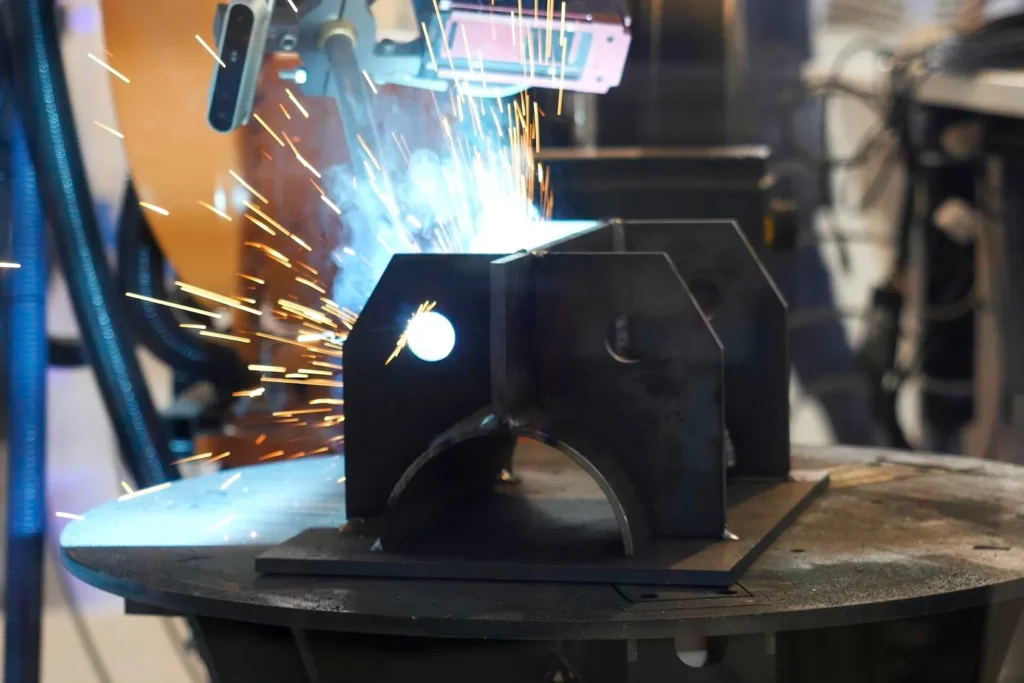
Many automotive parts are welded after they have been machined or partly assembled: gear housings, transmission components, exhaust sensors, fuel injector bodies, sensor housings and EV battery tabs and busbars. Arc welding puts a lot of heat into such parts, which can distort finished surfaces, harm nearby seals or electronics and leave spatter that has to be cleaned off.
A laser puts a small, controlled amount of energy into a narrow spot. Welds can sit close to sensitive areas, distortion stays low and the process can run under CNC or robot control. For automotive suppliers making many part variants in steady volumes, this gives repeatable joints with less rework.
Automotive joints do not all need the same laser. Thin foils and battery tabs need short, controlled pulses. Housings that must stay sealed need a continuous seam. Small precision parts need accurate positioning more than raw power. This page groups the equipment by the kind of joint rather than by laser power.
All three welding machines described here use fibre laser sources and run programmed welds under CNC control, so a weld recipe proven on the first part can be repeated on every part that follows.
Heat input decides whether a welded part comes off the machine ready for use or needs rework:
Each machine covers a different group of automotive welding jobs.
The Sigma Laser Fiber Laser Welding Machine uses a pulsed ytterbium fibre laser at 1064 nm in seven configurations from 60 W to 500 W mean power, with pulse peak power up to 13 kW and a 0.2 to 2.0 mm focus diameter. It welds from sub-0.1 mm foils to 5 mm plate in stainless steel, titanium, copper, aluminium, Inconel and dissimilar pairs.
The LASERVORM Compact Laser Spot and Laser Seam Welding Machine typically runs from 100 W to 1000 W with a spot size of 0.2 to 2 mm. It switches between spot and seam welding in software, follows CNC-programmed seam paths and works inside a Class 1 enclosure with interlocks.
The LASERVORM LV Flex Compact CNC Precision Laser Welding Machine offers pulsed, continuous and modulated modes, 210 × 110 × 110 mm optical axis strokes, ±0.02 mm repeat accuracy and up to two extra axes for rotary work. It runs on a standard 230 V supply and logs weld data for quality records.
The Donaldson BOFA AD 1000 Pro OS Connect extracts welding fume at 875 m³/hr and 60 mbar through a DeepPleat DUO pre-filter, HEPA and carbon stages, and connects to factory systems over Ethernet (RJ45) for central monitoring.
Housings, transmission components, exhaust sensors and other parts up to 5 mm thick are welded on the Fiber Laser Welding Machine, sized from 60 W to 500 W to suit the parts. Battery tabs, cell interconnects and housings that need sealed seams go to the Compact Laser Spot and Laser Seam Welding Machine. Small precision parts that need logged, repeatable welds are handled on the Compact CNC Precision Laser Welding Machine. Fumes from each station are captured by the AD 1000 Pro OS Connect, so the whole automotive welding cell comes from one supplier.
United Spectrum Instruments (USI), Chennai, is the exclusive distributor of Sigma Laser GmbH in India, the official distributor of LASERVORM and the authorised distributor of Donaldson BOFA, so automotive laser welding machines and fume extraction come from one supplier.
USI helps choose the laser type, power and welding mode for your joints and materials, and provides installation, operator training and technical support, including procurement support for government buyers through GeM.
Download the brochure from this page, use the Enquire Now button, write to sales@unitedspectrum.in, or call +91 93631 83748 / +91 97899 04948. Please mention:
aser welding puts a small, controlled amount of heat into a narrow spot, so machined and partly assembled automotive parts keep their shape and nearby seals or electronics stay protected. Welds are fast, clean and repeatable under CNC or robot control. This suits gear housings, transmission parts, exhaust sensors, injector bodies and EV battery tabs and busbars made in many variants.
It depends on what the joint has to do. Spot welds are quicker and suit separate joints such as battery tabs and cell interconnects. A continuous seam suits housings that must stay leak-tight or pressure-tight, such as sensor and battery housings. The LASERVORM Compact Laser Spot and Laser Seam Welding Machine switches between the two modes in software.
Yes, with the right settings. The Sigma Laser Fiber Laser Welding Machine welds stainless steel, titanium, copper, aluminium, Inconel and dissimilar pairs, and its Super Pulse Technology shapes each pulse to help control spatter and cracking. Reflective metals such as aluminium need tuned parameters, so the joint, material pair and thickness should be checked before the power level is chosen.
United Spectrum Instruments (USI), Chennai, is the exclusive distributor of Sigma Laser GmbH in India, the official distributor of LASERVORM and the authorised distributor of Donaldson BOFA. Automotive suppliers, EV battery makers and R&D centres get welding machines and fume extraction from one supplier, with help choosing the process, installation, operator training and support, and GeM support for government buyers.
Download the brochure from this page or click Enquire Now. You can also email sales@unitedspectrum.in or call +91 93631 83748 / +91 97899 04948. For an accurate quote, mention the parts and joints, materials and thickness, whether you need spot welds or sealed seams, part size, tolerances and volume, and whether CNC or robotic handling, data logging or fume extraction is required.


